
Reading the lines is easy; finding genuine value in UFC Fight Odds is where most bettors fail. At BYBET, our team of former traders sees this happen every fight card. Bettors frequently miscalculate risk and overpay for favorites, drawn in by a famous name rather than a sound statistical edge. This guide provides a step-by-step walkthrough to move beyond simple win/loss predictions and identify betting opportunities the general public often misses.
Deconstructing the Numbers: How BYBET’s UFC Odds Work
The odds you see aren’t just a prediction of who will win. They are a carefully calculated price that includes the bookmaker’s margin, also known as the “vig” or overround. Understanding this is the first step to becoming a sharper bettor. It’s the cost of placing a bet, and it’s baked into every market.
How Odds are Calculated and Adjusted
Our trading desk begins by creating an opening line based on statistical models. These models weigh factors like fighter history, style matchup, age, and recent performance. For example, a dominant wrestler might open as a -250 favorite against a striker with a documented 50% takedown defense. This initial number represents our baseline probability. However, this line almost never stays static. It moves based on where the money goes. If a huge volume of bets comes in on the underdog, perhaps due to a viral training clip, we will adjust the odds to balance our liability. The common error is chasing this “steam,” or betting on a fighter just because their odds are shortening. Often, this means you’re getting the worst of the price after the initial value is gone. The fix is to either bet early when you spot a mismatched line or wait to see if the public overreacts, pushing the line back to a point where the other side offers value.
Common Misinterpretations of Moneyline Odds
A frequent mistake is seeing a heavy favorite, like a champion at -400, and viewing it as “safe money.” This is a critical error in judgment. A -400 moneyline price implies that the fighter needs to win the fight more than 80% of the time just for your bet to break even over the long term. One upset erases four previous wins. The troubleshooting fix is to always translate odds into implied probability before placing a bet. To calculate it for a negative moneyline (favorite), use this formula: Odds / (Odds + 100) * -1. For a -400 favorite, it’s 400 / (400 + 100) = 0.80, or 80%. Ask yourself: “Do I truly believe this fighter wins this specific matchup more than 8 out of 10 times?” If the honest answer is no, then despite being the likely winner, the bet represents poor value.
BYBET presents up-to-date UFC Fight Odds for every major event.
Finding Value Beyond the Hype: A Deeper Fighter Analysis
The public bets on narratives, knockouts, and personalities. Smart money bets on data and specific, repeatable skills. Looking past the win-loss column to the underlying performance metrics is where you can find a reliable edge that most casual bettors completely ignore. A flashy record can easily hide a flawed process.
Beyond Win/Loss Records: Key Fighter Metrics
A fighter’s record is often misleading. A 15-2 record looks great, but what if those wins came against low-level competition? Our team focuses on process-driven stats that reveal a fighter’s true capabilities inside the octagon. These metrics show how they fight, which is more predictive than just seeing if they won. This is a very different analytical approach compared to judging something like La Liga match odds, where team-based stats dominate. For MMA, the individual numbers are what matter. Before any bet, confirm these key indicators.
| Metric | What It Tells You | Troubleshooting Sign |
|---|---|---|
| Sig. Strikes Landed per Min (SLpM) | A fighter’s offensive output and pace. High SLpM suggests an aggressive, high-volume style. | A low SLpM fighter priced as a favorite against a durable opponent might struggle to score points. |
| Takedown Average (per 15 min) | The effectiveness and frequency of a fighter’s wrestling offense. | A fighter with a low takedown average might be unable to exploit an opponent’s weakness on the ground. |
| Takedown Defense % | A fighter’s ability to keep the fight standing and negate an opponent’s wrestling. | A striker with a TDD below 70% is a major red flag against a credentialed wrestler. This is a classic value spot for the underdog. |
| Reach Advantage/Disadvantage | The physical difference that dictates striking range. A significant reach disadvantage can neutralize a pure boxer. | Ignoring a 5+ inch reach difference. The shorter fighter must have a proven method to close distance safely. |
Spotting Underdog Value in Specific Matchups
The most profitable opportunities often lie with the underdog. Value appears when the market overestimates the favorite’s chances or underestimates the underdog’s specific path to victory. The most common error is betting on the “better” fighter instead of the fighter with the better stylistic advantage in that particular fight. A classic example is a pressure grappler with a great chin versus a power puncher who has historically gassed out after the first round. The market might favor the knockout artist, but the grappler’s durability and wrestling create a clear path to win on the scorecards or by late submission. The exact fix is to map out how the underdog can win the fight. If you can identify a clear, plausible scenario based on their metrics (e.g., “survive round one, land two takedowns per round, win by decision”), you may have found a legit value bet.
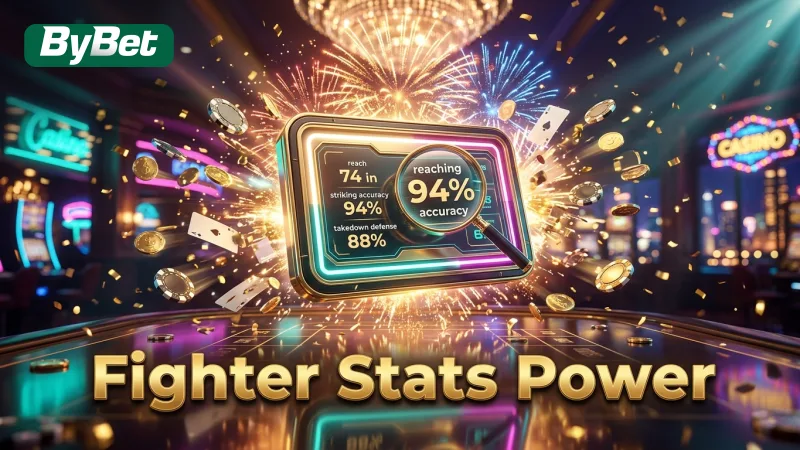
Analyze fighter stats like reach and striking accuracy to find hidden value.
Navigating Common Betting Pitfalls and Errors
Knowing the stats is only half the battle. The biggest leaks in a bettor’s bankroll come from psychological mistakes, not analytical ones. Discipline and a structured approach are what separate break-even players from a small percentage of long-term winners. These errors are predictable and avoidable with the right mindset.
Overcoming Emotional Bias in UFC Betting
Every bettor has favorite fighters, but letting that loyalty dictate your bets is a guaranteed way to lose money. This emotional bias causes you to ignore negative data points about your fighter and over-emphasize positive ones. Similarly, “recency bias”—where you place too much importance on a fighter’s last performance—is just as dangerous. A stunning knockout can make you forget a fighter’s defensive flaws that a more technical opponent will surely exploit. The solution is mechanical: a pre-bet checklist. Before you stake your PHP, force yourself to write down one reason why your chosen fighter might lose, and one reason why their opponent could win. This simple exercise forces a more balanced perspective and detaches the decision from pure emotion.
Avoiding “Parlay Traps” and Excessive Risk
Parlays, which combine multiple bets into one, promise massive payouts for a small stake. A ₱100 bet on four favorites might show a potential win of ₱550. This is a classic parlay trap. While the payout looks attractive, the actual probability of all four legs winning is much lower than you think. More importantly, with each leg you add, you are multiplying the bookmaker’s built-in margin. The vig on a single bet might be 4-5%, but on a four-leg parlay, the effective margin you are trying to overcome can swell to over 30%. This makes them a terrible long-term strategy. The fix is discipline: stick primarily to single bets where your analysis can create a genuine edge. If you must play parlays, keep them to two legs maximum. Many of the same risk principles apply when you are exploring dynamic markets like live betting on PBA games, where avoiding multi-leg bets is also key to managing risk.
Smart Bankroll Management and Responsible Wagering
Your betting bankroll is your most important tool. Without proper management, even the most skilled analyst will go broke. A disciplined approach to staking and understanding payout limits ensures you can withstand the inevitable losing streaks and stay in the game for the long haul. This is not gambling; it is risk management.
Setting Limits and Understanding Payout Structures
The single most common failure is betting too large a percentage of your bankroll on one fight. A string of bad luck can wipe you out. Professional bettors use a unit system. A “unit” is a fixed percentage of your total betting fund, typically 1-2%. If your bankroll for the month is ₱10,000, one unit is ₱100. No matter how confident you are in a pick, you should never risk more than 2-3 units (₱200-₱300). This protects you from variance. After depositing with GCash or Maya, your full balance is not your “to play” amount. Set daily or weekly loss limits and stick to them. This discipline is the absolute foundation of successful betting on UFC Fight Odds. If you hit your stop-loss, you shut it down and re-evaluate later. Chasing losses is the number one account-killer.
Resources for Responsible Gaming in the Philippines
Betting should always be a form of entertainment, never a source of financial stress. Our platform is strictly for users 18 years of age and older. It is critical to only wager amounts you are fully prepared to lose. When your analysis of the UFC Fight Odds is no longer fun, it’s time to take a break. PAGCOR regulates licensed operators in the Philippines to ensure fair play, and there are support organizations available for anyone who feels their gambling may be becoming a problem. Maintaining control and betting within a sensible budget is the only way to keep the experience enjoyable.
BYBET promotes responsible gaming to keep your betting enjoyable and safe.
The house edge is a mathematical reality. Your goal is not to win every bet—that’s impossible. It’s to find and exploit pricing errors consistently enough to overcome the vig over hundreds of bets. Focus on a repeatable process of analysis and discipline, not the result of a single Saturday night.
